Every Brewery Did It. One Said So.
Oct 30, 2026A copywriter named Claude Hopkins once took a tour of the Schlitz brewery. Schlitz had hired him to write its advertising, and the tour showed him how the beer was made.
He watched the whole process. One step stuck with him: the bottles were washed with live steam. He was told it was nothing special. Every brewery did the same thing.
Hopkins put it in the ads anyway.
I'm Damon Nelson. I've been a marketer and developer for more than 30 years, and this story changed how I write about my own work. Here's what happened, what Hopkins did next, and how to use the same move in your business.
"Washed with live steam"
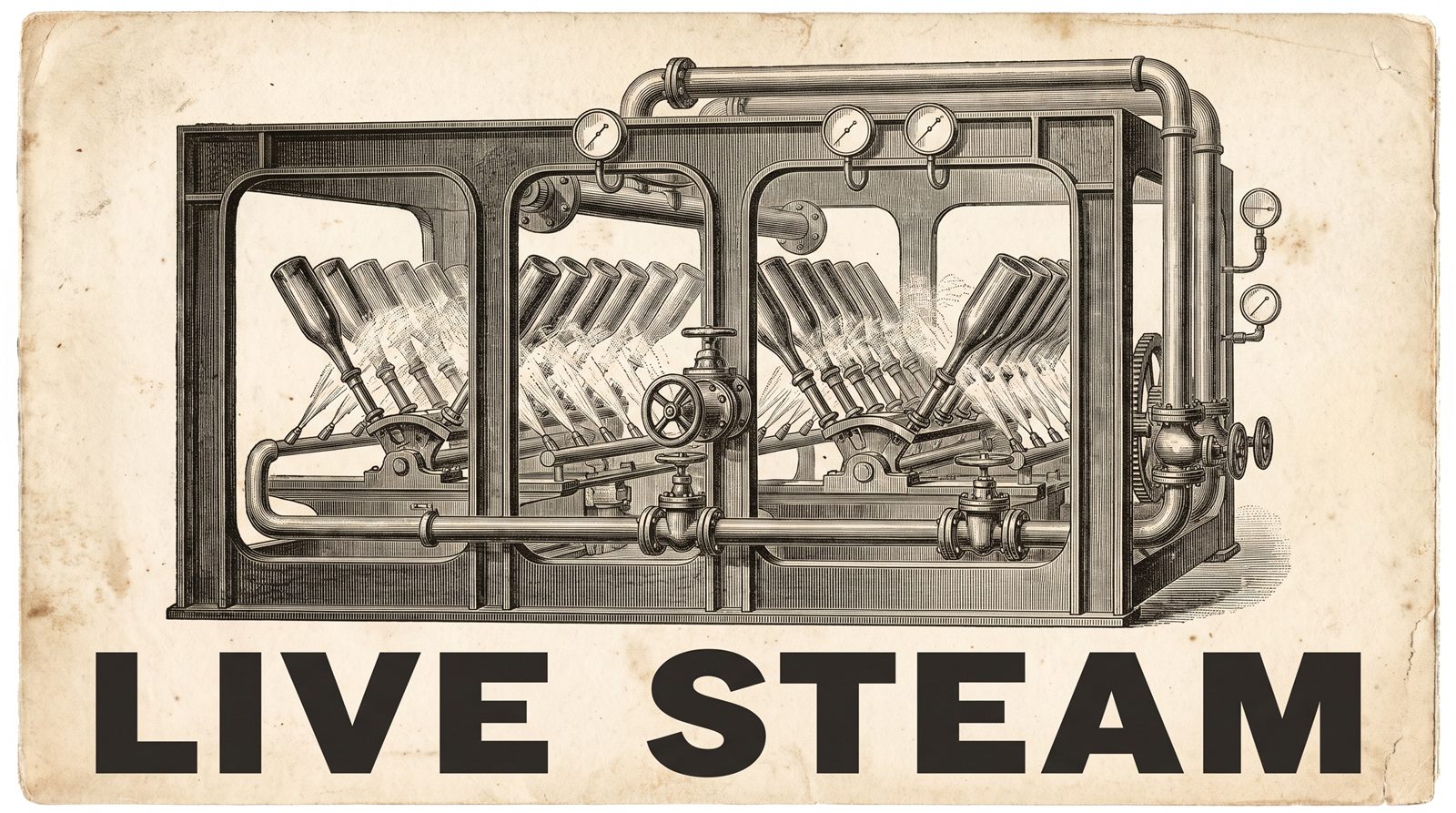
The other brewers used the same steps. But they didn't talk about them. Schlitz did. To the people reading the ads, Schlitz was now the brewery that cared about clean bottles and pure beer. The work was common. Explaining it wasn't.
Mark Tungate's history of advertising, Adland, confirms the "live steam" line and the fact that other breweries steam-cleaned too. It also says the Schlitz work led magazine publisher Cyrus Curtis to tell ad man Albert Lasker to hire Hopkins. Lasker ran the Lord & Thomas agency, and Hopkins went on to become its president and chairman.
You'll see a year and a sales ranking attached to this story in a lot of places. The dates in secondary sources don't agree with each other, and I haven't seen the ranking in a primary source, so I'm leaving both out.
THE WORK WAS COMMON. EXPLAINING IT WASN'T.
The preemptive claim
Marketers call this the preemptive claim. When you're the first to explain a process, you get to own it, even if your competitors do exactly the same thing. They can't copy you later without sounding like they're copying you.
Hopkins pushed copywriters to research a client's product until they could give a real reason to buy it. He called it "reason-why" copy. The Schlitz ads are a clean example. The reason was sitting in the bottling room the whole time.
He tested everything

The steam story gets told the most, but it isn't the thing Hopkins cared about most. He cared about proof.
According to his Wikipedia biography, he made heavy use of test campaigns and coupons so he could tell which ads actually brought in money. He sent out samples and tracked the results. He tested headlines, offers and propositions against each other, then kept what worked.
Before Lord & Thomas, he worked for the Bissell Carpet Sweeper Company. As economists George Akerlof and Robert Shiller tell it in Phishing for Phools, he mailed five thousand letters suggesting carpet sweepers as Christmas gifts, and one thousand people ordered. He also got Bissell to offer sweepers in twelve kinds of wood, and the company sold 250,000 in three weeks. Those figures come from their account, and I haven't checked them against a primary record.
Later, his Pepsodent campaigns were credited with popularizing tooth brushing in America. Charles Duhigg tells that story in The Power of Habit.
Scientific Advertising
In 1923, after he retired from Lord & Thomas, Hopkins published a short book called Scientific Advertising. It lays out an approach built on testing and measuring, so a losing ad costs you a little and a winning ad gets rolled out wide. It's often cited as an early description of split testing and coupon tracking.
David Ogilvy wrote, "Nobody should be allowed to have anything to do with advertising until he has read this book seven times. It changed the course of my life."
In 1927 Hopkins followed it with his memoir, My Life in Advertising, which is where his own account of the Schlitz work lives.
Your live steam
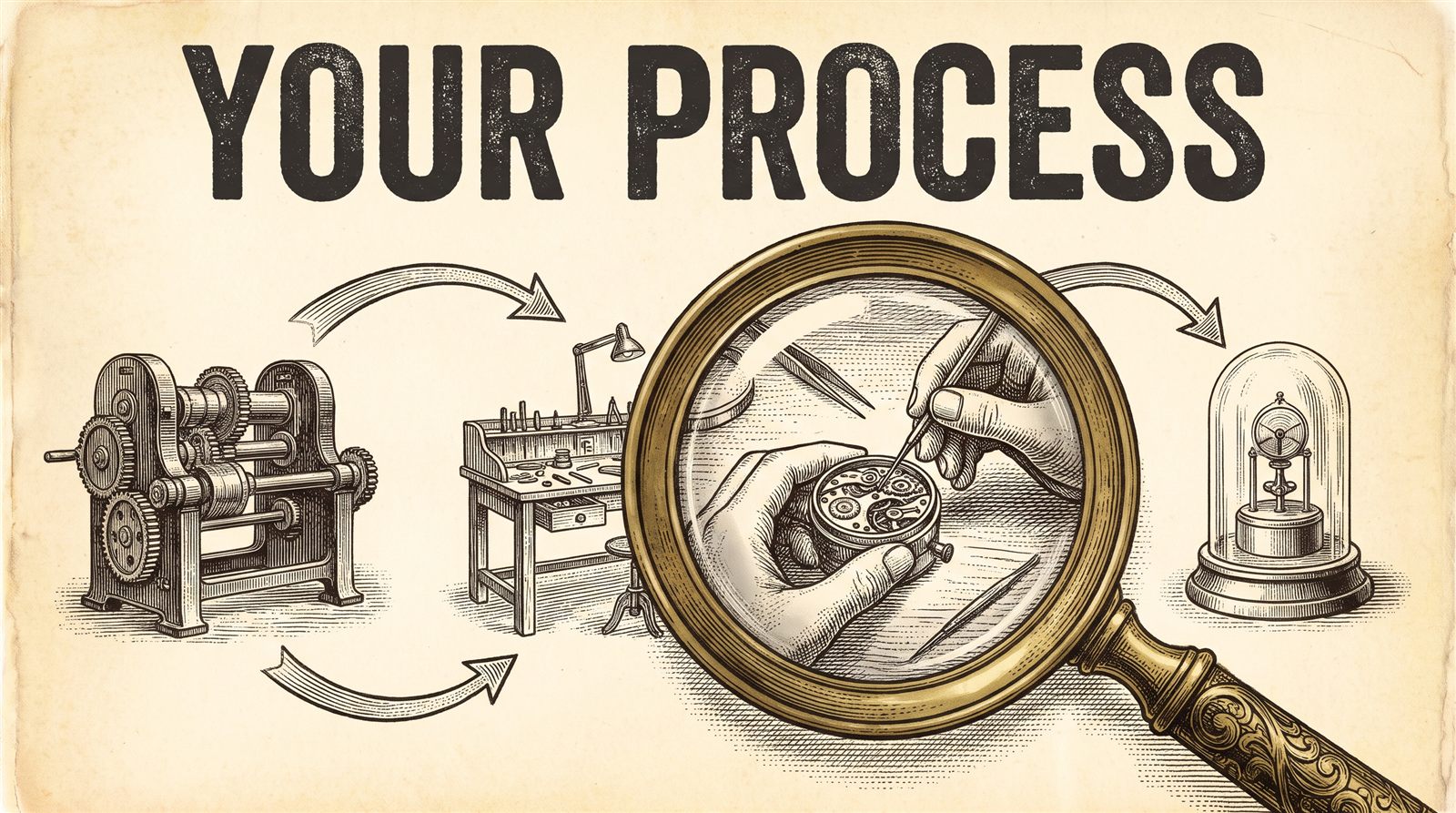
Most businesses have a version of this. The quality check you run on every order. The way you set up a new client. How you handle a refund. It feels too ordinary to mention because you do it every day. Your customers have never seen it.
How to use it: Write down every step of your process from first contact to finished job. Circle the three steps a customer would be surprised to learn about. Pick one and explain it plainly on your sales page or in your next post. Then test it, the way Hopkins would. Run the page with it and without it, and keep the one that sells.
Build it with us
At GeekOutFridays we spend 30 minutes on strategy like this and 60 minutes building one system with it. The mastermind meets live every other Friday.
Join the GeekOutFridays mastermind group. Sign up here.
Sources
- Wikipedia, "Claude C. Hopkins" (cites Akerlof and Shiller, Phishing for Phools, 2015, and Duhigg, The Power of Habit, 2012)
- Mark Tungate, Adland (excerpt)
- Wikipedia, "Scientific Advertising" (cites David Ogilvy, Ogilvy on Advertising, 1983)
- Claude C. Hopkins, Scientific Advertising, at the Library of Congress
Join GeekOutFridays Mastermind Club with this Special $7 Trial Offer.
Stay connected with news and updates!
Join our mailing list to receive the latest news and updates from our team.
Don't worry, your information will not be shared.
We hate SPAM. We will never sell your information, for any reason.