The 1932 Book That Still Settles the Headline Argument
Nov 10, 2026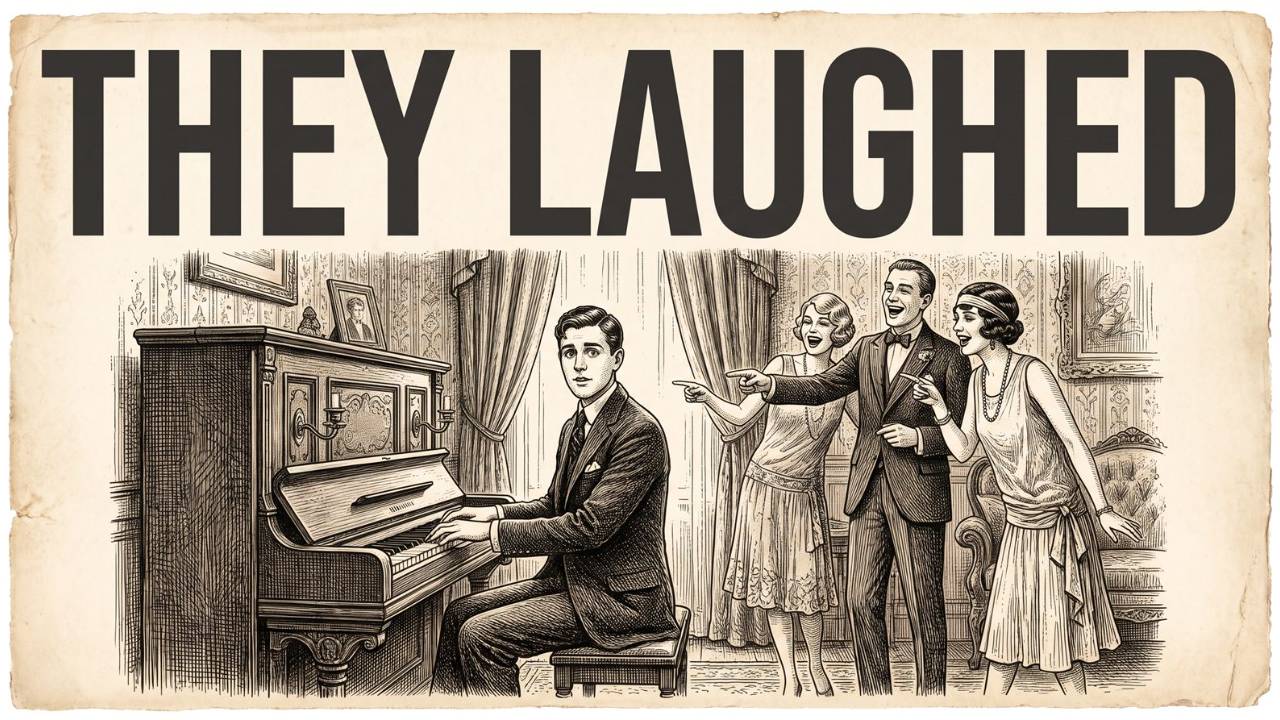
Every marketing team has had the same fight. One person wants the clever headline. Another wants the plain one. Somebody's boss likes the one with the pun. In 1932, a copywriter named John Caples published a book that ended that fight the only way it can be ended: count the responses.
The book was Tested Advertising Methods. I'm Damon Nelson, and I've been a marketer and developer for more than 30 years. This is one of the few ad books I'd still hand to someone starting out today. Here's the story behind it.
The engineer who was afraid of giving a speech
Caples was born in New York City in 1900. He started at Columbia University, but he left, partly to avoid a class that made students give a speech. He served in the Navy, then earned an engineering degree at the U.S. Naval Academy.
After graduation he took a job as a student engineer at New York Telephone and found it dull. A vocational counselor pointed him toward his writing. By 1925 he was a copywriter at the agency Ruthrauff & Ryan.
An engineer who hated public speaking ended up writing words that sold to strangers. That background shows in everything he did next. He treated ads like experiments.
"They laughed when I sat down at the piano"
In 1926, Caples wrote a mail-order ad for the U.S. School of Music. The headline was "They Laughed When I Sat Down at the Piano But When I Started to Play!" It became one of the best-known ads ever written, and it is often listed among the greatest ads of all time.
The next year he moved to the agency BBDO, where he worked on small mail-order accounts and later became a vice president. Mail order is where his method came from. When an ad asks the reader to clip a coupon and mail it in, you know exactly how many people answered.
Keyed ads: the scoreboard
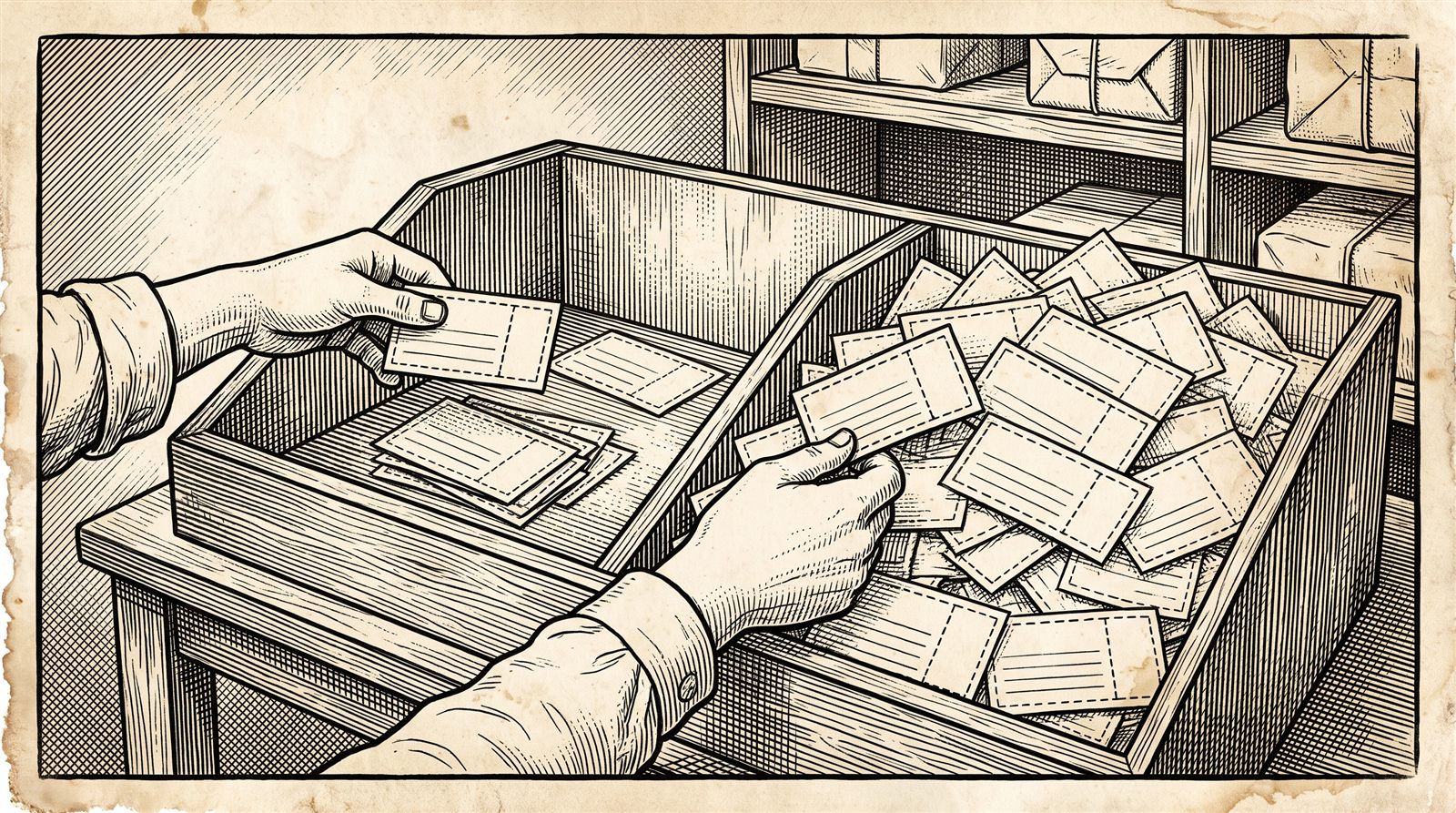
Caples's ads were keyed. Each version carried its own coupon or code, so the agency could tell which version brought in which replies. Run two headlines, count the coupons, keep the winner. Do it enough times and patterns show up.
He wrote those patterns down in trade-magazine articles, then collected them into Tested Advertising Methods in 1932. The book went through several editions, with the fifth edition, revised by Fred Hahn, coming out in 1998.
STOP GUESSING. COUNT THE COUPONS.
Three kinds of headlines, in order

The part that still settles arguments is his ranking of headlines. Caples sorted them into three classes:
- Self-interest. A headline that promises the reader something they want. He ranked this the strongest.
- News. Something new gives the reader a reason to stop.
- Curiosity. Last, and risky. In his words: "For every curiosity headline that succeeds in getting results, a dozen will fail."
Read that third one again with today's feeds in mind. A lot of what passes for a hook right now is pure curiosity. Caples's tests said most of those lose.
He also pushed for specifics: "One aid to believability is to use specific figures." A vague claim gets skimmed. A precise one gets believed.
The story behind the story

Caples was never in BBDO's copy or research departments, yet he is credited with making testing a normal part of advertising. A 1971 thesis on his work at the University of Illinois said he popularized the basic idea of testing. David Ogilvy called him "an indomitable analyzer and teacher of advertising."
He was inducted into the Copywriters Hall of Fame in 1973 and the American Advertising Federation Hall of Fame later that decade. He kept writing about direct marketing into the 1970s and died in 1990 at age 90.
The coupon is gone, but the idea is not. Every split test in an email tool, every A/B test on a landing page, and every ad platform that tells you which version won is a keyed ad with better plumbing.
How to use it this week
Take the headline you're about to publish. Sort it into one of Caples's three classes. If it's curiosity, write a self-interest version next to it. Add one specific number you can stand behind. Then run both and let the results decide. Not your taste, not your boss's taste, and not what sounded clever in the meeting.
Build it with us
At GeekOutFridays we spend 30 minutes on strategy like this and 60 minutes building one system with it. The mastermind meets live every other Friday.
Join the GeekOutFridays mastermind group. Sign up here.
Sources
- John Caples, Tested Advertising Methods (1932; 5th ed., revised by Fred E. Hahn, Prentice Hall, 1998), ch. 2 and ch. 3.
- Wikipedia, "John Caples" (cites Applegate, The Ad Men and Women, 1994; White, 1971 thesis, University of Illinois; Glenn Fowler, The New York Times, June 11, 1990)
Join GeekOutFridays Mastermind Club with this Special $7 Trial Offer.
Stay connected with news and updates!
Join our mailing list to receive the latest news and updates from our team.
Don't worry, your information will not be shared.
We hate SPAM. We will never sell your information, for any reason.