Writing a News Article: Format, Template, and AI Limits
Nov 05, 2026
Key takeaways
- A news article has five parts in order: headline, lede, nut graf, attributed body, and kicker, arranged in the inverted pyramid.
- The lede answers who, what, when, and where in under 40 words so a reader who stops after one sentence still leaves informed.
- The nut graf sits in the third or fourth paragraph and answers why the story matters in one to three sentences.
- Every quote and fact must be attributed to a named source with plain verbs like said or according to, never reshaped.
- AI news tools handle structure well but often invent quotes or misattribute facts, so every draft needs human verification before publishing.
Writing a news article comes down to one structure: headline, lede, nut graf, supporting quotes, and a kicker, arranged in the inverted pyramid so the most important facts come first. This piece dissects each section against a real worked example, hands you a copyable template, and shows how to feed the format to an AI tool without the output reading robotic.
The whole post in 9 slides
What is the format of news article writing?
The five parts, in order
A news article has five structural parts: the headline, the lede, the nut graf, the body with quotes and attribution, and the kicker. The headline names the story. The lede, usually one sentence under 40 words, gives the who, what, when, where. The nut graf explains why the story matters. The body delivers facts and sourced quotes in descending order of importance. The kicker closes with a forward-looking line or a telling detail.
Why the order matters for skimmers and for Google
This order exists because most readers skim and leave early. Editors call it the inverted pyramid: most important facts first, background last, so a story can be cut from the bottom without losing its point. Google's news guidance rewards the same structure, asking publishers to clearly attribute original reporting and distinguish it from aggregation. Structure is also where AI drafts get judged. Tools like Article Forge (how NewsMasher compares) can lay out the five parts, but the order only works when the facts inside it are ranked the way a journalist would rank them.
How does the inverted pyramid work in practice?
Ranking facts before writing
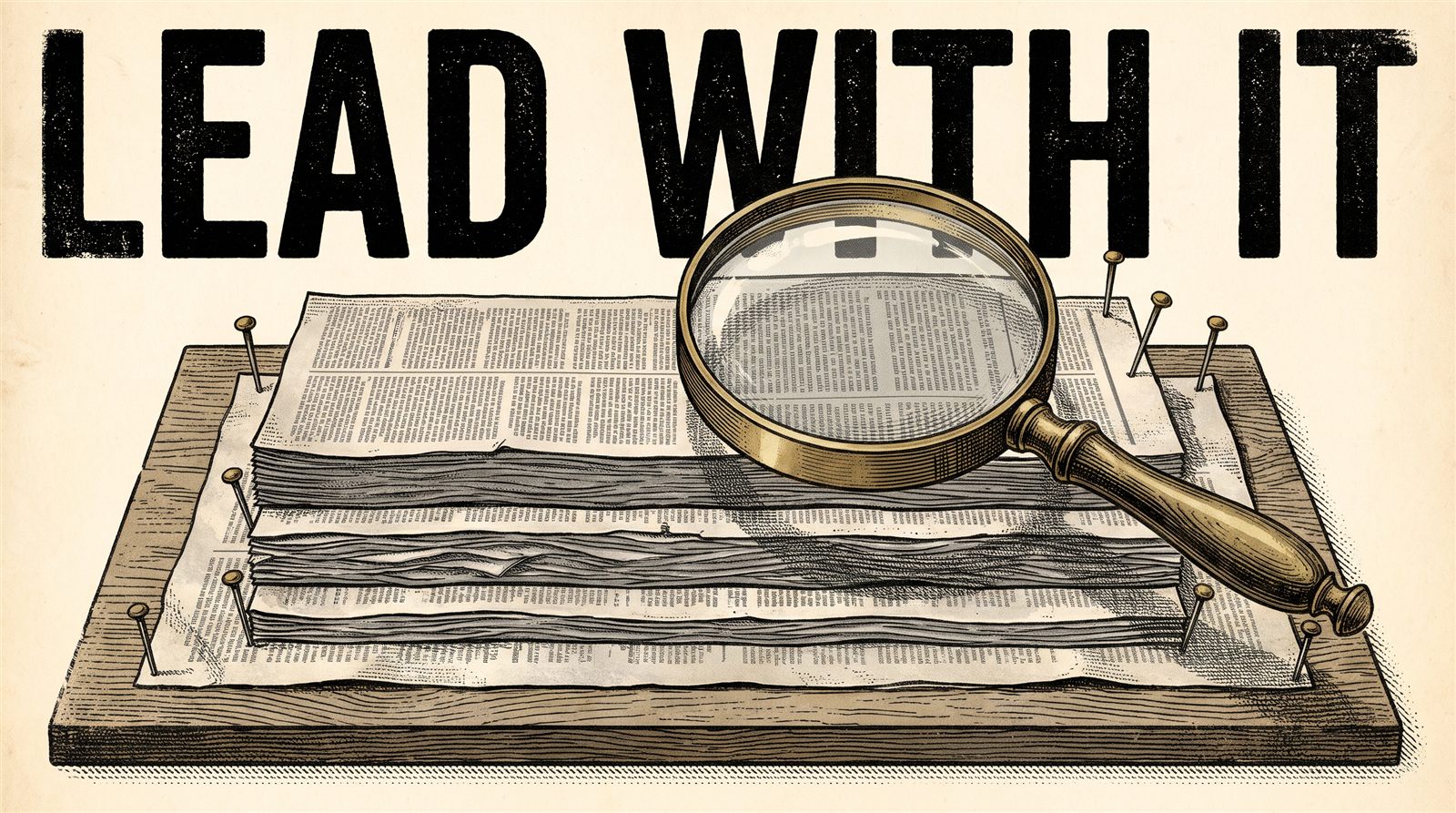
List every fact from your reporting, then rank them by one question: if the reader stops after this line, have they got the story? The answer to "who did what, where, when" goes first. The "why" and "how" follow. Background, history, and anything you'd cut under deadline go last.
Ranking before writing matters because it forces decisions most AI output skips. Tools that generate from a prompt alone have no ranking step, which is why their paragraphs all sound equally weighted. When I feed a trend into NewsMasher, it reads the whole story before it writes a word, then leads with the ranked top fact rather than a vague summary.
What belongs in the bottom third
The bottom third carries context: prior coverage, related events, boilerplate explanations a regular reader already knows. This is where readers drop off, and that's fine. Write so the person leaving at paragraph three still leaves informed. Anything you couldn't bear to lose belongs higher up, not buried for structure's sake.
What makes a headline and lede that survive the SERP?
Headline: front-load, cut filler
Your headline should carry the keywords a searcher actually types, in the first 60 characters, with no cleverness that costs clarity. "Fed cuts rates by 25 basis points" beats "The Fed Just Made a Move You Won't Believe." Front-load the noun, cut articles and adjectives where you can, and never promise what the story doesn't deliver.
Lede: the 5W check, annotated
Take this real-world pattern: "A wildfire burning north of Los Angeles has forced 4,000 residents to evacuate, county officials said Tuesday."
Annotating it: who (residents, officials), what (wildfire forcing evacuations), where (north of Los Angeles), when (Tuesday), and why/how (the threat) all land in 17 words. The attribution, "officials said," is doing the honesty work. Poynter's guidance on attribution and the inverted pyramid is worth reading in full: the lede exists so a reader who stops after one sentence still leaves informed.
That one-sentence test is the discipline most AI content skips. Tools that generate from a keyword, rather than reading the source reporting, produce ledes that gesture at a topic instead of stating what happened. This is why we built NewsMasher to read the whole story before it writes a word, and why we hold every piece for approval by default; if you'd rather compare against a tool that writes from keywords alone, see our breakdown of AutoArticle AI. Whichever tool you use, apply the 5W check yourself: if any W is missing from the first sentence, the lede is decoration, not journalism.
Where does the nut graf go and what does it actually do?
The nut graf is the third or fourth paragraph, soon after the lede. Its job is to answer "why should I care?" in one tight block: the stakes, the context, and who this story affects. The lede tells readers what happened; the nut graf tells them why it happened and why now.
Why it earns the reader's trust
A good nut graf proves you understand the story, not just the headline. It connects one event to the bigger trend your niche reader follows daily. Skip it and your article reads like a summary; include it and it reads like reporting. This is also where most AI output collapses, which is why tools like NewsMasher (how NewsMasher compares to SEOWriting.ai) differ from generic writers: it reads the whole story before it writes a word, so the nut graf carries real context instead of filler.
Annotated nut graf from a real story
Say the lede reads: "The FDA approved a new diabetes drug on Tuesday." A working nut graf follows: "The approval matters to the 38 million Americans with diabetes because the drug is the first in its class to..." That second sentence names the audience, the stakes, and the "first" that makes it news. One or two sentences is enough. If your nut graf runs past three, you are writing background, not a nut graf, and it belongs later in the piece.
How do you use quotes and attribution without inventing anything?
Attribution verbs that stay honest
Every quote needs a name, a title, and a source. If the original story quotes a CEO, your article says "according to" or "said" that person, and links to where you found it. Use plain verbs: said, told, added, according to. Avoid "claimed" or "admitted" unless the original reporter used them, because those verbs carry judgment you did not earn.
Never reshape a quote. If you shorten it, use ellipses and keep the meaning intact. Paraphrase instead when you are unsure, and attribute the paraphrase the same way: "The company said delivery times would improve."
The accuracy trap: why AI output needs human review
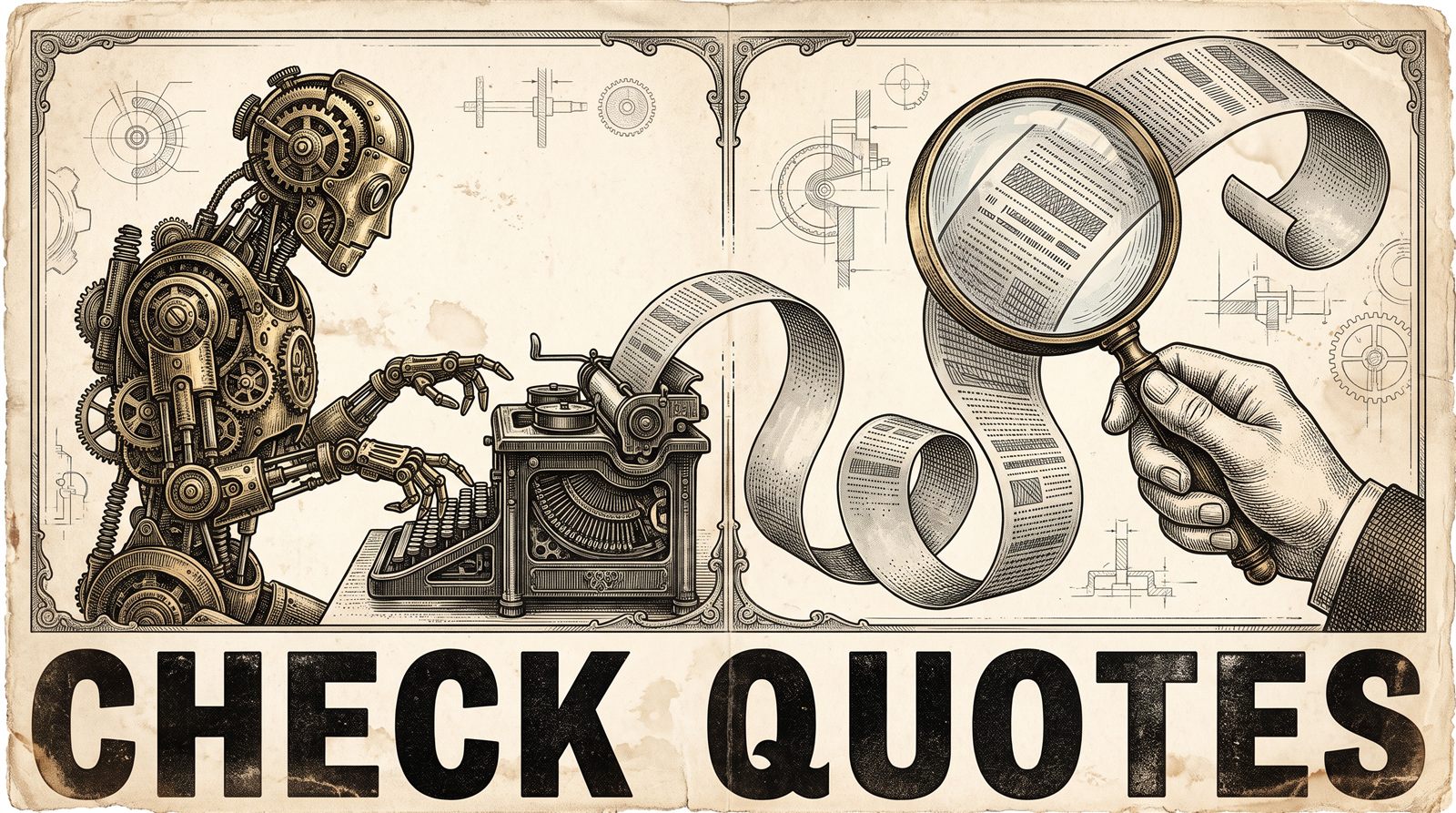
This is where AI-assisted news writing fails most often. A model asked to "add quotes" will invent plausible-sounding ones from people who never spoke. It will also attribute facts to the wrong source or merge two stories into one. Every quote, name, and number in a generated draft needs checking against the original reporting before you publish.
That is why NewsMasher reads the whole story before it writes a word and pulls quotes only from that source, and why you can hold every piece for approval rather than let it run. The trade-off is speed: approval mode means you are still the last line of defense, and the clock matters in news. Our terms spell out what the tool does and does not verify on your behalf.
What is a kicker and how do you end a news article?
A kicker is the final sentence. It should close the loop, not summarize what the reader already read.
Three kicker patterns
- Forward-looking: what happens next ("The council votes on the proposal Thursday").
- Callback: echo a detail from the lede for symmetry.
- Quote kicker: end on a source's strongest line, not your own commentary.
Pick one per article and stop writing. A news article that trails off for two more paragraphs loses trust.
Annotated kicker example
"The store closes March 31." [Forward-looking: concrete date, no editorializing.] "I've served three generations of this town," said owner Dale Marsh. [Callback quote: ties back to the lede's human angle.]
Note what's absent: no opinion, no recap. If an AI tool writes your kicker, check it hasn't appended a summary instead. Tools like Autoblogging.ai generate full drafts that still need a human pass for accuracy, so read the last line before you hit publish.
Can I get a copyable news article writing template?
Here is the fill-in-the-blank version of everything above. Copy it, paste it into your editor, and replace the brackets.
The template, section by section
- Headline: [Subject] + [what happened] + [why it matters to your niche]
- Lede (1–2 sentences): Who did what, when, where.
- Nut graf (2–3 sentences): Why this story matters to your reader, and what context they need to care.
- Body (2–4 paragraphs): Key facts in descending order of importance, each attributed to a named source.
- Quote (1–2): Verbatim from the original reporting, attributed by name and role.
- Kicker (1 sentence): What happens next, or the detail that lingers.
Word-count budget per section
| Section | Budget | Purpose |
|---|---|---|
| Headline | 8–12 words | Survives the SERP |
| Lede | 25–40 words | Answers the 5 Ws |
| Nut graf | 40–60 words | The "why you" |
| Body | 250–400 words | Facts, attributed |
| Kicker | 15–25 words | Clean exit |
Aim for 350–550 words total. Shorter beats padded.
How do news article writer AI tools fit this format, honestly?
What the tools do well
Most AI news writers handle structure correctly. Autoblogging.ai, Byword, NewsRank and Article Forge all produce headline, lede, nut graf, body, kicker in the right order, because the inverted pyramid is the easiest part to template. If you give a tool a source article, it can summarise it in pyramid form without much trouble. The basics of that structure are well documented if you want to check a tool's output against them (inverted pyramid overview).
Where they fall short, including ours
Structure is not the hard part. Reading is. The recurring complaint about tools like Journalist AI is output that reads like competent AI content, not a subject matter expert, and that needs human editing for factual accuracy in niche topics. Most tools summarise a headline and a snippet; few read the whole story before writing a word.
NewsMasher reads the full source article first, then writes in your voice from your Writing Profile, and holds every piece for approval if you want it. Its honest limit: it cannot verify a claim the original reporter got wrong, and on deeply technical subjects you should still read before publishing. Set-and-forget works best for fast-moving stories where being two days late costs more than one flawed draft.
What does a finished example of journalistic news article writing look like?
The full piece, annotated
Here's a short piece built from the template above, on a fictional local story:
Headline: Riverside Bakery Reopens One Week After Fire
Lede: Riverside Bakery reopened Monday, one week after a grease fire closed its downtown kitchen. (Who, what, when in 14 words.)
Nut graf: Owner Dana Cole said the shop lost about $8,000 in inventory, and staff worked through the weekend to pass a health inspection. (Why it matters, with a number and a source.)
Quote: "We didn't want people finding out by walking past," Cole said. (Direct quote, attributed.)
Kicker: The bakery's holiday hours start Friday. (One line forward.)
Every element earns its place: the lede answers the clock-sensitive question first, the nut graf justifies reading on, and the kicker points ahead. Run any AI draft against this checklist and you'll see fast which parts read like a journalist wrote them and which parts need a human pass before publishing.
FAQ
How long should a news article be for a niche site?
Aim for 350 to 550 words. That budget covers a headline of 8 to 12 words, a lede of 25 to 40, a nut graf of 40 to 60, a body of 250 to 400, and a 15 to 25 word kicker. Shorter beats padded. If you exceed it, you are usually writing background that belongs in its own piece.
Is expository writing the same as news article writing?
No. Expository writing explains a topic and can organize it however suits the explanation. News writing reports an event, ranks facts by importance in the inverted pyramid, and attributes every claim to a named source. The lede answers who, what, when, and where before any explanation appears, which expository pieces rarely do.
Can I rewrite trending news in my own words legally?
Yes, if you attribute. Facts themselves are not copyrightable, so you can report what happened, but you must credit the original outlet, use plain attribution verbs like said or according to, and link to the source. Never copy sentences verbatim, never reshape a quote, and never present someone else's reporting as your own.
What is the difference between a lede and a nut graf?
The lede is the first sentence or two, stating what happened with the who, what, when, and where in under 40 words. The nut graf follows as the third or fourth paragraph and answers why the story matters, naming the audience and the stakes. One or two sentences is enough; past three, you are writing background.
Do AI news writers get facts wrong, and how do I check them?
Yes, especially with quotes and attribution. A model asked to add quotes will invent plausible ones from people who never spoke, attribute facts to the wrong source, or merge two stories. Check every quote, name, and number against the original reporting before publishing, and hold generated drafts for approval rather than letting them run unreviewed.
Join GeekOutFridays Mastermind Club with this Special $7 Trial Offer.
Stay connected with news and updates!
Join our mailing list to receive the latest news and updates from our team.
Don't worry, your information will not be shared.
We hate SPAM. We will never sell your information, for any reason.